







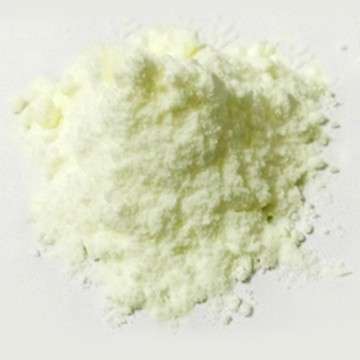
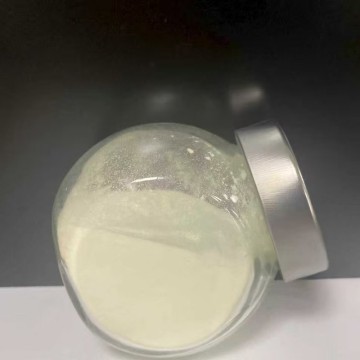
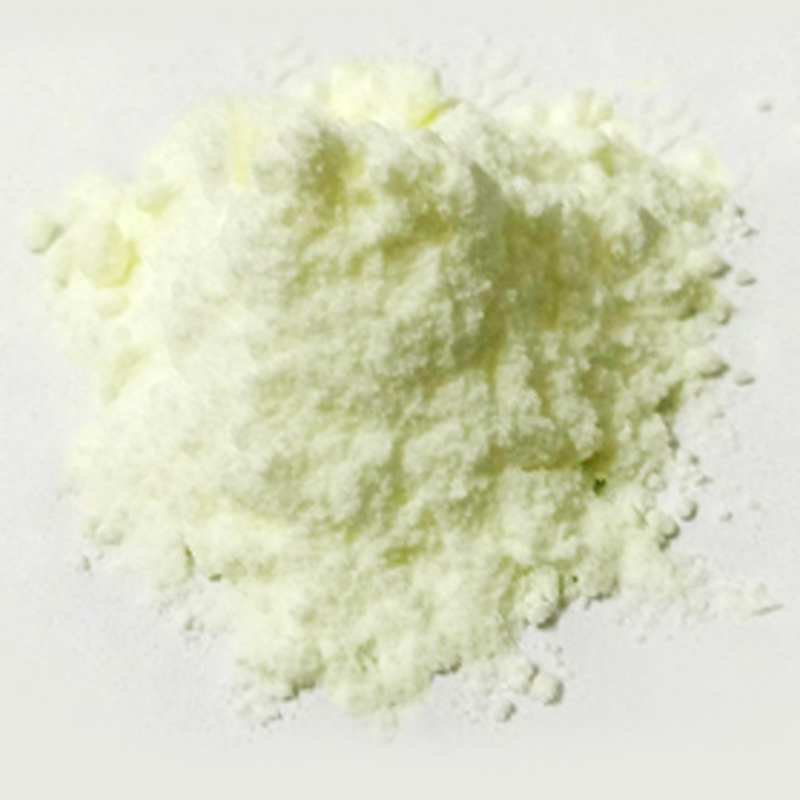
China Suppliers Factory for 2,4,6-Trimethylbenzoyl-Diphenylphosphine Oxide - Premium Photoinitiator TPO
Structure and working principle
The core structure contains a phosphine oxide group, which undergoes α-cleavage after absorbing light energy. Upon photon absorption, the C-P bond in the molecular structure undergoes homolytic cleavage, directly generating two highly reactive free radicals, thereby initiating the polymerization chain reaction of monomers such as acrylate.
Key Features and Advantages
1. Long-wave UV Absorption
Its effective absorption range covers the UVA region (approximately 350-400nm) with a slight extension into the visible light spectrum. It also matches UV-LED light sources at wavelengths of 365nm, 385nm, and 395nm.
2. High Reactivity
As a kind of pyrolytic initiator, it has high efficiency of free radical generation and high reactivity, and can achieve rapid curing.
3. Excellent Surface Solidification
This is a very prominent feature of TPO. Because of its absorption characteristics, it can effectively initiate polymerization on the surface of the coating, thus greatly reducing the oxygen inhibition effect.
Oxygen inhibition is a common issue in UV curing: airborne oxygen quenches free radicals, causing the coating surface to become sticky and incomplete curing. TPO effectively resolves this problem, delivering a dry, non-sticky surface.
4. Hypochromic Discoloration
The yellowing of the polymer is very low because the color of the photodegradation product is very light.
Main Application Areas
TPO's high surface curing efficiency and low yellowing characteristics make it highly favored in the following fields:
1. Coatings and inks (high surface requirements)
Wood coatings: High-gloss clear and colored paints for furniture and flooring, ensuring a dry, hard surface.
Plastic coatings: such as UV coatings for mobile phone cases and appliance casings, which must have a non-sticky surface.
Paper lamination: For glossy finishing of magazines and packaging boxes, requiring instant curing and a smooth surface.
Metallic coatings: used for decorative coatings such as cans.
2. White system
Because titanium dioxide (TiO2) has strong scattering and shielding effect on short-wave ultraviolet (UVC) light, only long-wave UVA can effectively penetrate. The absorption characteristics of TPO make it one of the preferred photoinitiators for white UV coatings and inks, which can achieve full curing of white systems.
3. 3D printing
TPO is widely used in SLA/DLP/LCD 3D printing. It ensures rapid curing of each resin layer after exposure, promotes adhesion with the next layer, and minimizes surface residue adhesion.
4. Adhesives
For UV-curing adhesives requiring rapid surface drying.
TPO and 819 both belong to the acylphosphine oxide class, and you can consider TPO as 819's close relative. Here's a comparison between TPO and 819:
| Characteristic | TPO | Irgacure 819 |
|---|---|---|
| Chemical name | 2,4,6-trimethylbenzoyl-diphenylphosphine | Phenylbis(2,4,6-trimethylbenzoyl)phosphine |
| Maximum absorption wavelength | Approximately 370-380 nm | Approximately 370-390 nm (stronger absorption, wider tail) |
| Core advantage | It exhibits outstanding surface curing capability and excellent resistance to oxygen inhibition. | Enhanced deep curing capability with superior penetration for thicker coatings and colored systems. |
| Typical application | Clear varnish, white paint, coating with high surface requirements. | Thick-layer curing, colored (especially dark) systems, and 3D printing. |
| Relation: These products are often used in combination: TPO addresses surface curing while 819 handles deep curing, achieving a perfect balance between surface drying and deep curing. | ||
Usage Notes
Composite application: In industrial formulations, engineers often combine TPO with 819 or other photoinitiators (e.g., ITX) to achieve optimal curing performance, balancing surface drying and deep curing.
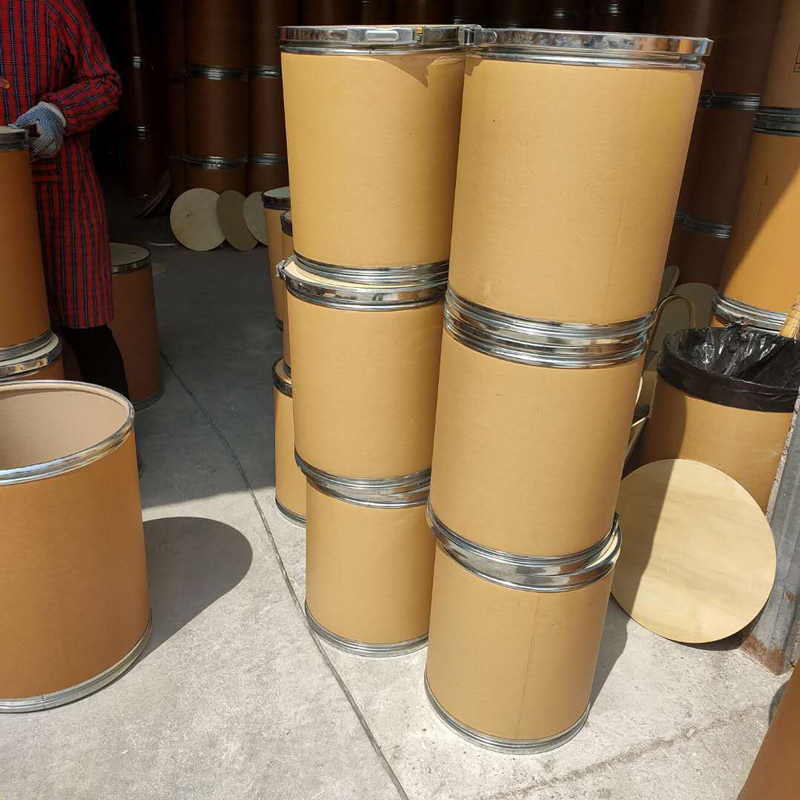
Storage: Need to avoid light, seal, and maintain low temperature preservation.
Safety: It may irritate skin and eyes. Protective measures should be taken during operation.
Frequently Asked Questions
How does TPO initiate polymerization?
TPO contains a phosphine oxide group that undergoes α-cleavage upon absorbing UV light. The C-P bond in its molecular structure cleaves homolytically, directly generating two highly reactive free radicals that initiate the polymerization chain reaction of monomers like acrylate.
What UV wavelengths are best suited for TPO?
TPO works effectively in the UVA region (approximately 350-400nm) and slightly extends into the visible spectrum. It matches perfectly with UV-LED light sources at wavelengths of 365nm, 385nm, and 395nm.
How does TPO solve the oxygen inhibition problem?
TPO has unique absorption characteristics that allow it to highly efficiently initiate polymerization directly on the surface of the coating. This rapid surface curing minimizes the quenching of free radicals by airborne oxygen, resulting in a dry, non-sticky finish.
What is the difference between TPO and Irgacure 819?
TPO excels in surface curing and resisting oxygen inhibition, making it ideal for clear varnishes and white coatings. Irgacure 819 provides stronger deep curing and penetration, which is better suited for thick layers and dark, colored systems.
Can TPO and 819 be used together?
Yes, they are commonly used in combination. Combining TPO and 819 allows formulators to balance surface drying (handled by TPO) and deep curing (handled by 819) for optimal overall curing performance.
What are the storage requirements for TPO?
TPO is light-sensitive and must be stored in light-shielded, tightly sealed containers under low-temperature conditions to prevent premature polymerization.