Picking the right Ptfe Pcb Material supplier? Yeah, that can really affect signal integrity, production stability, and how reliable your product stays over time. If you're buying globally, it’s not just about lining up price lists. You’ve got to look closely at things like dielectric constant, dissipation factor, thermal expansion, copper adhesion, and the fabrication support they offer. Honestly, even small differences can matter. It’s kind of wild how much of a difference a few mils can make — they can totally change performance.
John Coonrod, a longtime high-frequency materials specialist at Rogers Corporation, puts it this way: “Dk is not a constant; it changes with frequency, resin content, and test method.” That’s a point worth paying attention to when you’re evaluating PTFE laminates for radar systems, satellite communications, aerospace electronics, or high-speed networking. And if you’re dealing with reliable suppliers, they should give you traceable datasheets, consistent lot-to-lot control, technical guidance, and clear manufacturing tolerances. And their materials need to fit right in with the buyer’s processes—pressing, drilling, plating, assembly, all of it. Because claims on paper alone? Yeah, that’s just not enough.
This 2026 guide looks at some of the leading PTFE PCB material suppliers that serve international markets. It weighs things like material consistency, engineering know-how, delivery capability, application coverage, and customer support. Think of it as a practical evaluation—not some absolute ranking. After all, no single ranking can fit every project. A material that shines in a 77 GHz radar board, for example, might not be the best pick for a compact microwave module. And keep in mind: some supplier details may change over the course of the year. Buyers—before you place a volume order—it's really smart to double-check the current specs, test methods, certifications, and how the samples actually perform. Mistakes tend to creep in when folks accept technical promises without any proof from real production.
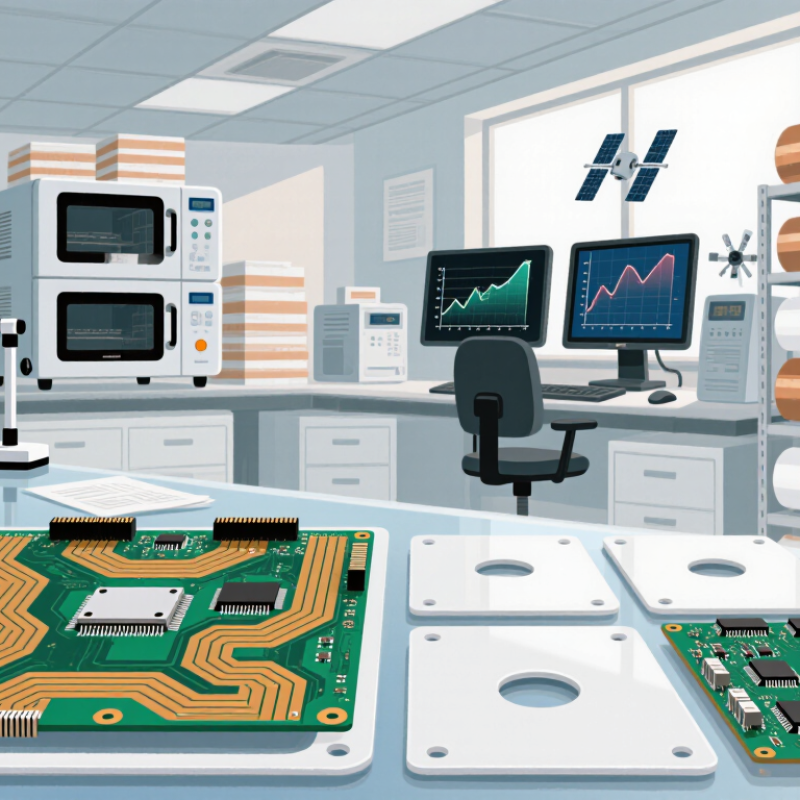
Ptfe Pcb materials use polytetrafluoroethylene as the primary dielectric layer. Engineers choose them for high-frequency circuits where signal loss must remain low. PTFE typically offers a dielectric constant near 2.1 to 2.6. Its low dissipation factor helps preserve signal strength across demanding transmission paths.
The material also resists moisture, chemicals, and wide temperature changes. It stays stable. However, PTFE is softer than many conventional laminates. Drilling, copper bonding, and dimensional control require careful process settings.
In prototype reviews, we often inspect hole walls, copper adhesion, and board flatness before approving production. No material is perfect. A design can still fail when the stack-up ignores thermal expansion or connector transitions.
Common applications include radar modules, satellite communication equipment, automotive sensing systems, and high-speed wireless hardware. A radar board may operate beside a heat source, while a compact antenna board may need controlled impedance within a narrow space. Glass reinforcement can improve mechanical stability, but it may also influence electrical uniformity. Engineers should compare resin content, copper roughness, thermal performance, and fabrication capability before selecting a grade. Test results matter more than attractive datasheets. This is where supplier documentation sometimes feels incomplete, and buyers should request measured frequency data, tolerance details, and sample panels.
Evaluating a PTFE PCB material supplier requires more than comparing prices. Request current datasheets, production records, and test reports for every Pcb Ptfe grade. Check dielectric constant, dissipation factor, thickness tolerance, copper compatibility, and thermal stability. Values should match your actual operating frequency and temperature range.
Ask how the supplier controls resin distribution across large panels. Uneven resin content can create impedance variation during fabrication. Request samples from different production lots, not only one carefully selected panel. A reliable supplier should explain inspection methods, traceability codes, storage conditions, and packaging protection. Moisture and surface damage may appear after shipping.
Experience matters here. I would review previous high-frequency applications, engineering response times, and failure-analysis procedures. Ask for realistic lead times, minimum order quantities, and replacement policies. Certification documents are useful, but they do not replace independent testing. Test the material with your own stack-up and lamination cycle. Small differences can become costly at scale.
Look closely.
A polished sales sheet can still hide practical weaknesses. I have seen supplier evaluations focus heavily on dielectric figures while ignoring drilling behavior and copper adhesion. That is an imperfect approach. Recheck the assumptions. A supplier willing to discuss limitations may prove more dependable than one promising flawless performance.
PTFE PCB sourcing now depends on measurable process control, not catalog claims. Across 2024 reports from IPC and independent market analysts, high-frequency material demand is projected to grow roughly 7–9% annually through 2030. This growth is linked to radar, satellite communication, and high-speed data equipment.
A capable supplier should disclose PTFE resin content, dielectric constant, dissipation factor, copper roughness, and thickness tolerance. It should also provide test methods, not only attractive values. IPC-4103 remains a useful reference for high-frequency laminate qualification. Buyers should request lot-level certificates, thermal stress results, and dimensional data after pressing.
Manufacturing depth matters. Look for controlled resin mixing, clean-room lamination, automated drilling, plasma treatment, and calibrated dielectric testing. A reliable factory can explain how it manages PTFE’s low surface energy during copper bonding. It should also show production capacity by panel size, monthly output, and normal lead times.
Still, supplier profiles can mislead. A low Df figure may come from a different test frequency or specimen condition. That difference is easy to overlook. During audits, compare sample data with pilot-batch results, especially after thermal cycling. Ask whether engineering changes trigger customer approval. This detail often reveals a supplier’s real quality culture.
2026 Top PTFE PCB Material Suppliers for Global Buyers
Technical Standards for Selecting PTFE PCB Materials
Selecting PTFE PCB material should begin with the operating frequency, not a supplier’s sales description. A laminate rated at 10 GHz may behave differently at 24 GHz. Request dielectric constant and dissipation factor values at your actual frequency, temperature, and test direction. Test methods must be consistent, such as IPC-TM-650 or ASTM D150. Small measurement differences can change impedance results.
Reinforcement type matters. Glass fabric improves dimensional stability, while ceramic loading can reduce thermal expansion and improve dielectric control. Check the reported Dk uniformity across the panel, not only the average value. Moisture absorption should remain low, especially for outdoor radar or high-humidity equipment. Ask for copper peel strength, thickness tolerance, and z-axis expansion data. These figures affect drilling, plating, and long-term reliability.
Thermal data also needs careful review. PTFE does not behave like conventional epoxy laminate during pressing. Confirm the recommended lamination profile, cooling rate, and storage conditions. IPC-4103 and IPC-6018 can support material qualification, but they do not replace application testing. I would compare at least three production lots and inspect finished test coupons. Real boards sometimes expose problems that certificates miss. That is uncomfortable, but useful. Request lot traceability, certificates of conformance, and retest policies before approving global shipments. Supplier response time is a technical factor too. Delayed data can stop a production line.
For global buyers, pricing a Ptfe Circuit Board depends on more than the laminate itself. Material grade, copper thickness, board size, layer count, drilling accuracy, and surface finish can change the quotation quickly. A reliable supplier should separate tooling, testing, packaging, and shipping costs. Ask for a line-by-line price breakdown. Otherwise, a low unit price may hide expensive setup charges.
Lead times should be checked against the production stage. Prototype orders may take 10 to 20 working days, while larger batches often require four to eight weeks. Complex microwave designs need additional inspection. Delays happen. Allow a buffer for engineering questions, material allocation, and customs clearance. Request a written schedule with sample approval, production, inspection, and dispatch dates. One overlooked drawing revision can restart the clock.
International orders also need complete technical and commercial documents. Provide Gerber files, stack-up details, impedance targets, tolerance ranges, and acceptance standards. Confirm minimum order quantities, payment terms, packaging methods, and the agreed delivery term. Certificates for materials and test reports may be required by your local importer. Check the tariff classification with a qualified customs professional. Packaging should protect edges and prevent moisture exposure during ocean or air transport. I would not approve a quotation without confirming whether testing fees and replacement terms are included. That omission causes avoidable disputes.
In 2026, global buyers should judge PTFE Pcb Material through controlled evidence, not polished samples. IPC-4103 defines base-material requirements, while IPC-6013 covers qualification and performance for flexible printed boards. Ask for lot-level dielectric constant, dissipation factor, copper adhesion, thickness, and dimensional stability records. Reliable suppliers should trace each sheet to its resin batch, pressing cycle, operator, and final inspection. Small details matter.
ISO’s Survey of Management System Standards Certification recorded 1,265,216 ISO 9001 certificates across 189 countries and economies in 2022. That scale shows certification is widespread, but it does not guarantee PTFE process capability. Verify certificate scope, validity, audit findings, and the actual manufacturing site. For regulated projects, request ISO 14001, IATF 16949 where applicable, and documented RoHS and REACH controls. Do not accept a logo alone.
Supply-chain reliability needs measurable promises. The World Bank’s 2023 Logistics Performance Index evaluated customs, infrastructure, international shipments, logistics competence, tracking, and timeliness across 139 economies. Apply these dimensions when comparing buffer stock, alternate freight routes, export paperwork, and delivery performance. Ask for 12-month OTIF records, press-line capacity, and a tested second source for critical copper foil. A supplier may pass every audit yet miss one urgent shipment. That gap deserves a written contingency plan, not optimism.
Typical nominal Dk values help global buyers compare PTFE-based PCB material families during supplier qualification. Final selection should also verify IPC-4103 compliance, ISO 9001 quality systems, material traceability, test reports, RoHS and REACH documentation, production capacity, and supply-chain continuity.
Note: Dielectric-constant values vary with resin formulation, glass reinforcement, ceramic loading, test method, frequency, and resin content. Always confirm the supplier’s current datasheet and certificate package.
Request current datasheets, production records, test reports, and certificates of conformity. Check every material grade separately. Request samples from several production lots. One sample is not enough.
Compare dielectric constant and dissipation factor at your actual frequency and temperature. A value measured at 10 GHz may not predict performance at 24 GHz. Confirm the test direction and method.
Ask how resin distribution is controlled across each panel. Review dielectric uniformity, thickness tolerance, and impedance results. One perfect panel proves little.
Review thermal expansion, z-axis expansion, moisture absorption, copper peel strength, and thickness tolerance. Confirm the pressing profile and cooling rate. Drilling behavior matters too.
Use your own stack-up and lamination cycle. Inspect finished test coupons after fabrication. Compare at least three production lots. I would not trust certificates alone.
Check technical response time, traceability codes, storage conditions, packaging, lead times, minimum order quantities, and replacement terms. Ask about failure analysis. Fast answers matter when production stops.
Require separate prices for material, tooling, testing, packaging, and shipping. Confirm payment terms, delivery terms, and testing fees. A low unit price can hide setup costs.
Provide complete design files, stack-up details, impedance targets, tolerances, and acceptance criteria. Request milestone dates for approval, production, inspection, and dispatch. Keep a buffer for revisions and customs clearance. Protect edges from moisture.
This guide to the 2026 top PTFE PCB material suppliers helps global buyers understand how Ptfe Pcb Material supports high-frequency, high-speed, and demanding electronic applications. It explains the material’s key properties, including low dielectric loss, stable electrical performance, thermal resistance, and dependable signal integrity. Buyers will also learn how to evaluate suppliers by reviewing manufacturing capabilities, material consistency, engineering support, production capacity, and experience with international orders.
The article outlines important technical standards and selection factors, such as dielectric performance, thickness control, copper compatibility, thermal expansion, and mechanical reliability. It also discusses pricing, lead times, minimum order requirements, shipping documentation, and communication expectations. Finally, the guide highlights the importance of quality control, traceability, recognized certifications, inspection procedures, and supply chain resilience when comparing suppliers. These considerations can help purchasing teams choose reliable PTFE PCB material sources that meet both technical requirements and long-term production goals.